
Operating Model Architecture
Strategy without
architecture is
just a slide.
The technology changes every cycle — ERP, SaaS, workflow, RPA, AI. The architecture must evolve as well in order to turn technology promises into financial reality. I've been doing it through every wave.
The Architecture
Technology leaps.
Adoption doesn't.
Every technology wave — ERP, workflow, shared services, automation, AI — promises transformation. The ones who capture value aren't the fastest adopters. They're the ones who architect their target operating model to absorb the change.
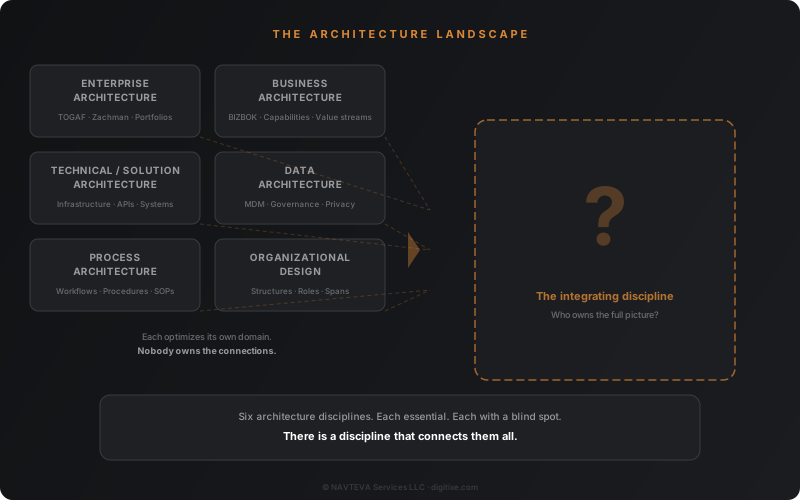
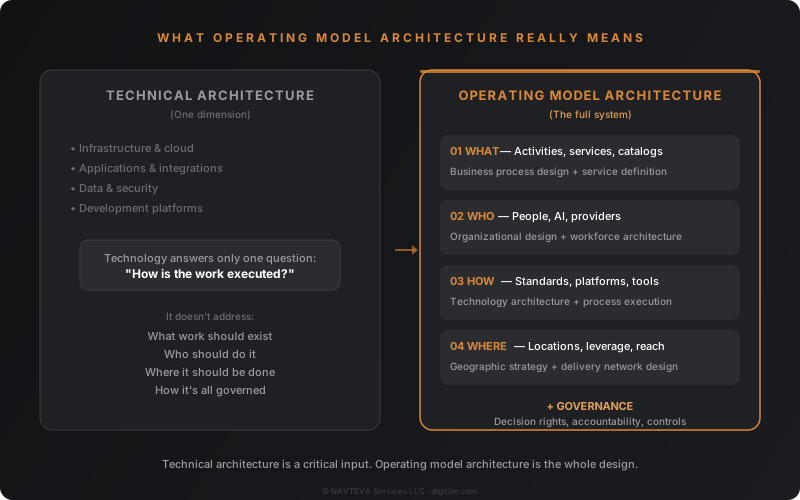
When we say architecture, we don't mean IT systems. We mean the full operating model — business processes, organizational design, technology platforms, and governance — designed as one integrated system. What we mean by architecture →
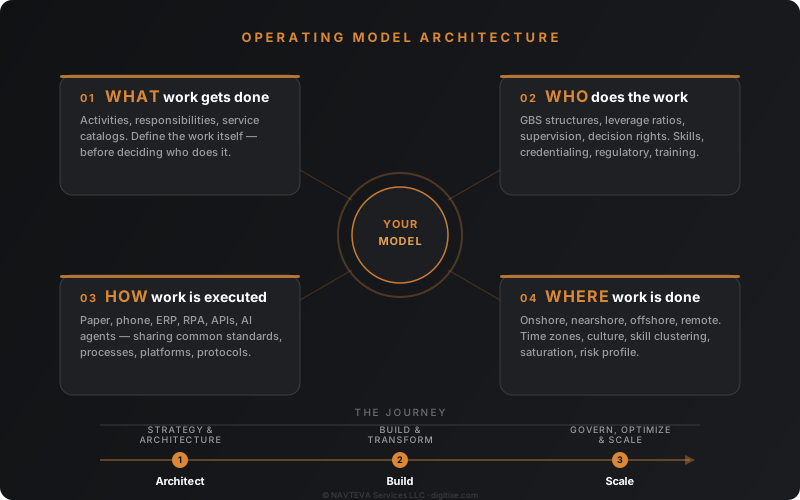
WHAT work gets done
Activities, tasks, responsibilities, service catalogs. The architecture starts with defining the work itself — before deciding who does it.
WHO does the work
Employees, contractors, AI agents, service providers — organized through GBS structures, leverage ratios, supervision models, and decision rights. Including the skills, regulatory requirements, credentialing, and training each one demands.
HOW work is executed
On paper, by phone, in ERP, through RPA, via APIs, or by AI agents — all sharing common operating and data standards, processes, job aids, platforms, and communication protocols. The tools evolve, the process architecture endures.
WHERE work is done
Onshore, nearshore, offshore, remote. Site selection, time zones, culture, skill clustering and saturation, risk profile, service redundancy. Geography is an architecture decision, not an afterthought.
The Framework
Four dimensions. Three phases. One architecture.
Every operating model answers the same four questions. Our three service families walk you through the lifecycle of getting those answers right — from strategy through execution to continuous evolution.
How We Help
Architecture from strategy through execution
Operating model consulting that goes deep where the architecture lives — and wide enough to make sure it holds.
Strategy & Architecture
Operating model design, digital strategy, transformation roadmaps, and M&A integration — from diagnostic through blueprint.
Build & Transform
Platform architecture, process design, technology implementation, and organization standup — turning blueprints into operating businesses.
Govern, Optimize & Scale
Program management, risk and compliance, performance management, and continuous improvement — from GBS operations to AI-ready models.

Built, Not Theorized
This wasn't strategy on a slide.
This was building the machine.
One of the earliest and largest SAP implementations globally. The second-largest workflow installation by volume in the world. A 70,000-person global delivery network built from scratch — site selection, legal structures, practice acquisitions, service catalogs, skill architecture, talent development, leverage ratios by service, pricing, delivery standards, budgets, and the technology platform that tied it all together.
Common Questions
Frequently asked questions
What does 'Operating Model Architect' mean?
An architect designs the system that everything else plugs into. We don't just advise on operating models — we architect them: strategy, technology, process, people, and governance, all designed to work together. Like a building architect who understands structural engineering, electrical, and plumbing well enough to design a building where they all work — that's what we do for operating models.
How is digitiXe different from traditional consulting firms?
Big firms send partners to sell and juniors to deliver. We send the person who built PwC's 70,000-person global delivery network, architected one of the earliest large-scale SAP platforms, and designed the second-largest workflow installation by volume in the world. No junior team. No 200-slide deck. One senior architect who stays until the model works.
Where does AI fit in your approach?
AI is the most powerful technology shift in a generation — but it follows the same adoption cadence as every wave before it. We've guided organizations through ERP, workflow, shared services, and automation. AI is the latest chapter, not a new story. The question isn't 'what can we automate?' — it's 'what does your operating model look like when AI agents share the work?'
Is your experience relevant to mid-market companies?
We've architected operating models at the largest scale — which means we've already made the mistakes that cost millions and learned which components actually drive value. For mid-market companies, that means you get the distilled playbook: the 20% that drives 80% of the value, without the enterprise overhead you don't need.
Ready to architect your
operating model?
No junior team. No 200-slide deck. One conversation with the architect who's been building these models for 35 years.
Schedule a Conversation